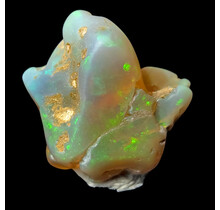

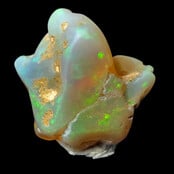
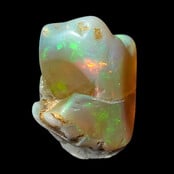
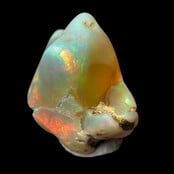
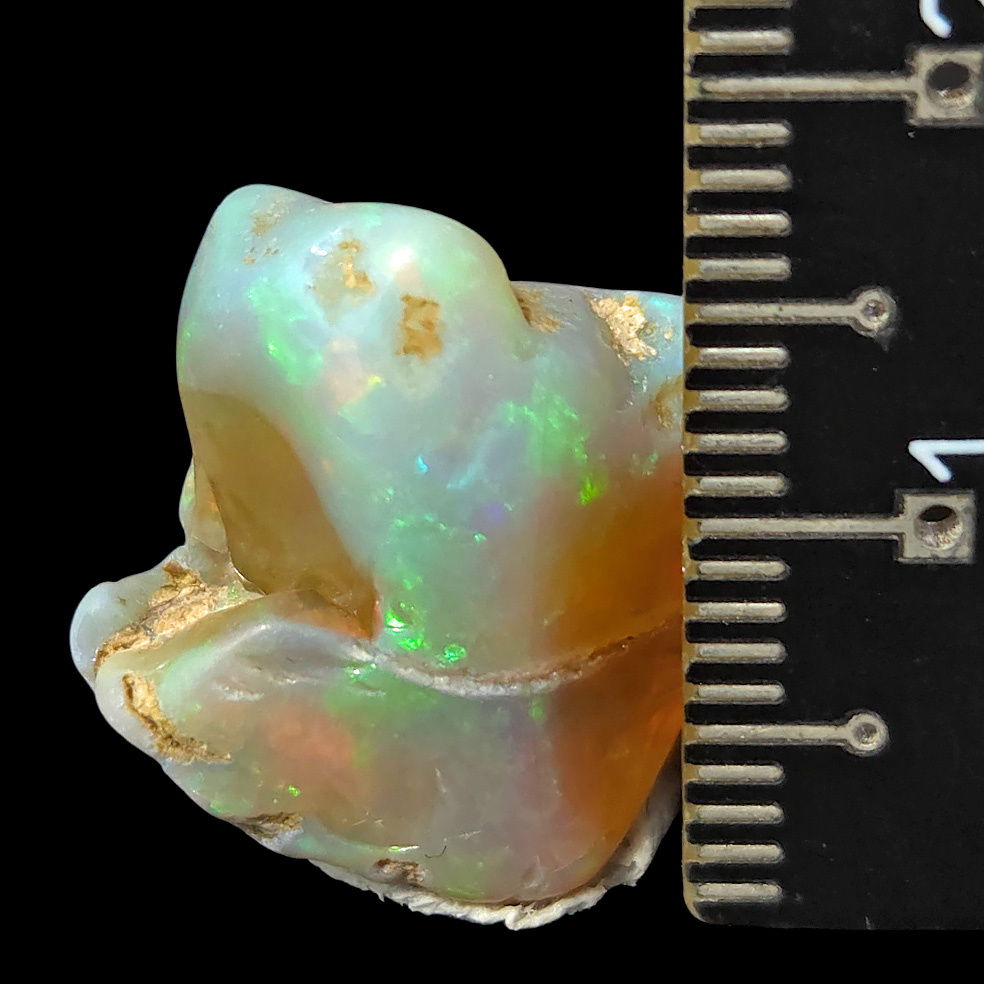
Tumbled Welo opal
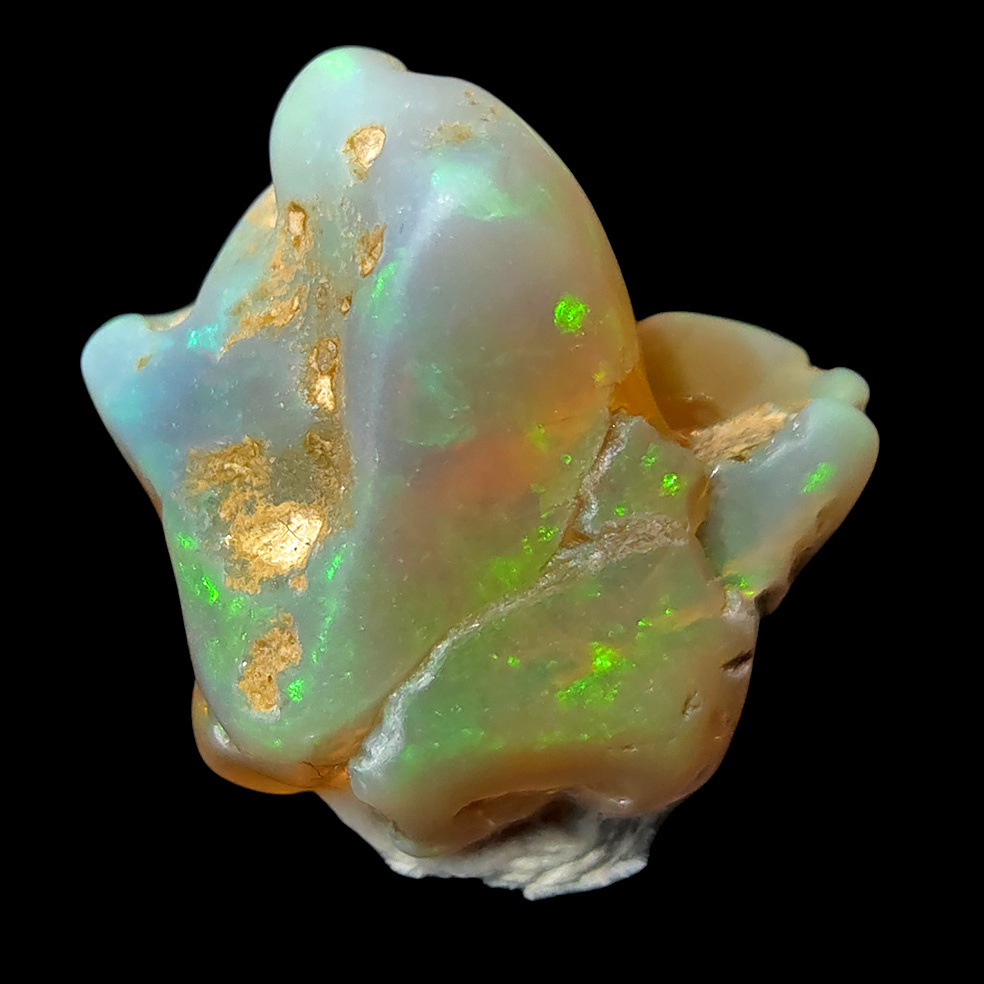
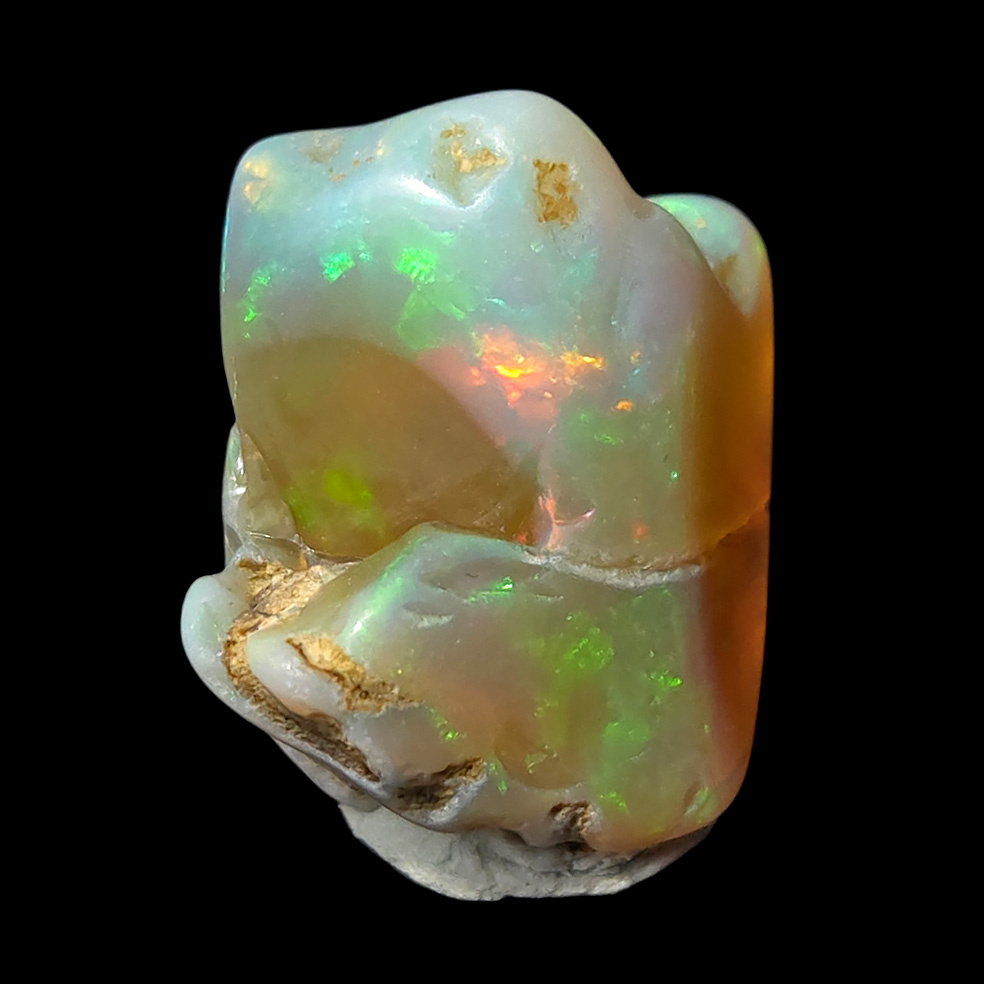
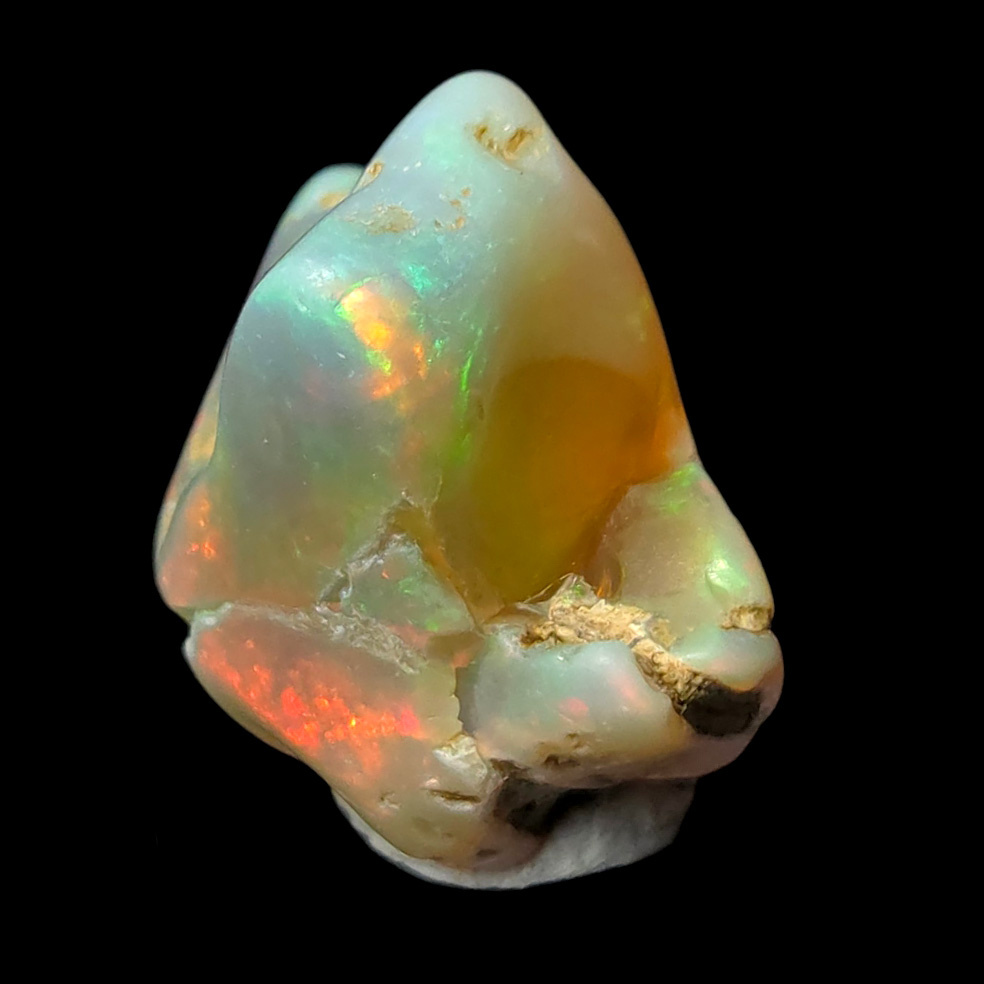
Tumbled Welo opal from Ethiopia, known for its exceptional play of color and hydrophane properties. This is a smoothly polished natural opal!
- Shipped within 24 hours
- Authenticity guaranteed
- Direct import
- Heeft u nog vragen? See our frequently asked questions
Origin, formation and sites
Welo opal is a natural opal from Ethiopia known for its often striking play of colors. Opal consists of hydrated silicon dioxide. The material forms when silicon-rich water enters small cavities and cracks in rock. Over time, the water is partially drained, leaving behind a solid mass of extremely small silica spheres. When these spheres are arranged regularly, incident light can be refracted, creating the typical rainbow colors of precious opal.
The well-known Welo opals were formed in volcanic rocks, including layers of volcanic ash and ignimbrite. A large portion of these deposits dates from the Miocene and is millions of years old. Much Welo opal is so-called hydrophane opal: a porous variety that can temporarily absorb water. As a result, a stone may become more transparent after contact with water, and the play of colors may temporarily change. After careful drying, the original appearance usually returns.
The most important deposits are located in the Ethiopian region of Wollo, also spelled Welo, in northern Ethiopia. The area around Wegel Tena in Wollo province, in particular, has become internationally known for the production of high-quality precious opal. The stones offered here are tumbled, whereby their original rough surface has been rounded and smoothed.
History and naming
The name Welo opal refers to Welo or Wollo, the Ethiopian region where significant deposits of this opal are found. The word opal has a much older origin. The name is generally associated with the Latin opalus and the Greek opallios , terms that were already used in antiquity for colorful gemstones.
Opal has been known for thousands of years and was valued as a gemstone by the Romans, among others. Ethiopian opal gained international renown primarily after significant new deposits were discovered in the 1990s and 2000s. The finds from Wollo attracted much attention because they yielded large quantities of opal with bright and sometimes very intense play of color. Since then, Welo opal has become a trusted material among gem cutters, jewelry makers, and mineral collectors.
Spiritual aspects
Within modern gemstone and spiritual traditions, opal is often associated with creativity, inspiration, emotional awareness, and personal expression. Due to its ever-changing play of colors, Welo opal is also symbolically linked by some enthusiasts to change, spontaneity, and viewing situations from different perspectives.
Tumbled Welo opal, for example, is worn as a meditation stone, used during personal rituals, or kept in a collection as a symbolic stone. These spiritual properties are based on tradition and personal belief and have not been scientifically proven.
Interaction, care and safety
Opal has a hardness of approximately 5.5 to 6.5 on the Mohs scale, making it softer and more fragile than quartz, for example. Preferably store tumbled Welo opal separately from harder minerals to prevent scratches. Avoid hard impacts, sudden temperature changes, prolonged exposure to strong heat, and aggressive cleaning agents.
Because much Welo opal is hydrophane, the stone can absorb water, oil, and other liquids. Prolonged soaking is therefore not recommended. Contact with perfume, cosmetics, cleaning agents, and oil can affect the appearance of the stone and sometimes cause discoloration that is difficult to reverse. If necessary, clean the opal gently with a soft, slightly damp cloth and allow it to air dry naturally. Do not use opal for gemstone water or other water solutions intended for consumption. Furthermore, small tumbled stones are not toys and can pose a choking hazard to young children.
Fun facts
- Welo opal can display a very broad color spectrum, including red, orange, yellow, green, blue, and violet. The play of red colors in precious opal, in particular, is often considered highly prized.
- Many Welo opals are hydrophanous. When such a stone absorbs water, it can temporarily become more transparent and the play of colors may appear less visible. During drying, the appearance gradually changes back.
- The play of color in precious opal is not a pigment color. It arises because light is refracted by microscopic, ordered silica particles in the stone.
| Article code | WELO3 |
| EAN | 8784765488618 |
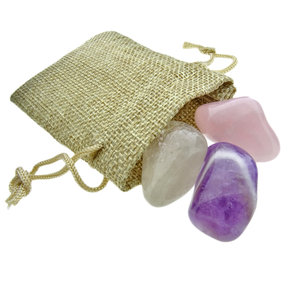
Golden triangle set consisting of amethyst, rose quartz and rock crystal. The golden triangle placed in the house is see...
Beautiful golden yellow imperial topaz. The stone associated by the ancient Greeks and Romans with the sun god Ra.
These 'pearls of fire' from Indonesia are particularly powerful stones formed by volcanic eruptions and fall under the p...
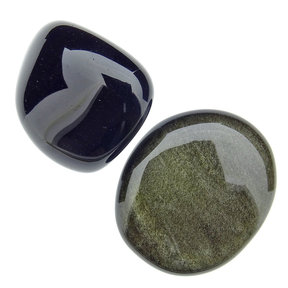
Obsidian is natural glass formed from rapidly cooling lava. It has been used for centuries by all major civilizations.