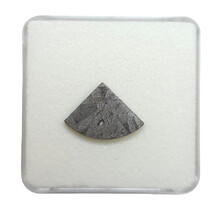

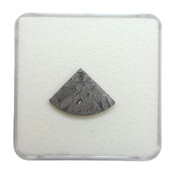
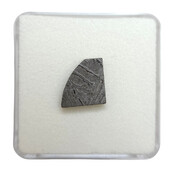
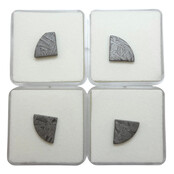
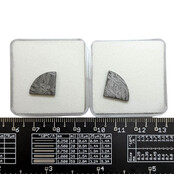
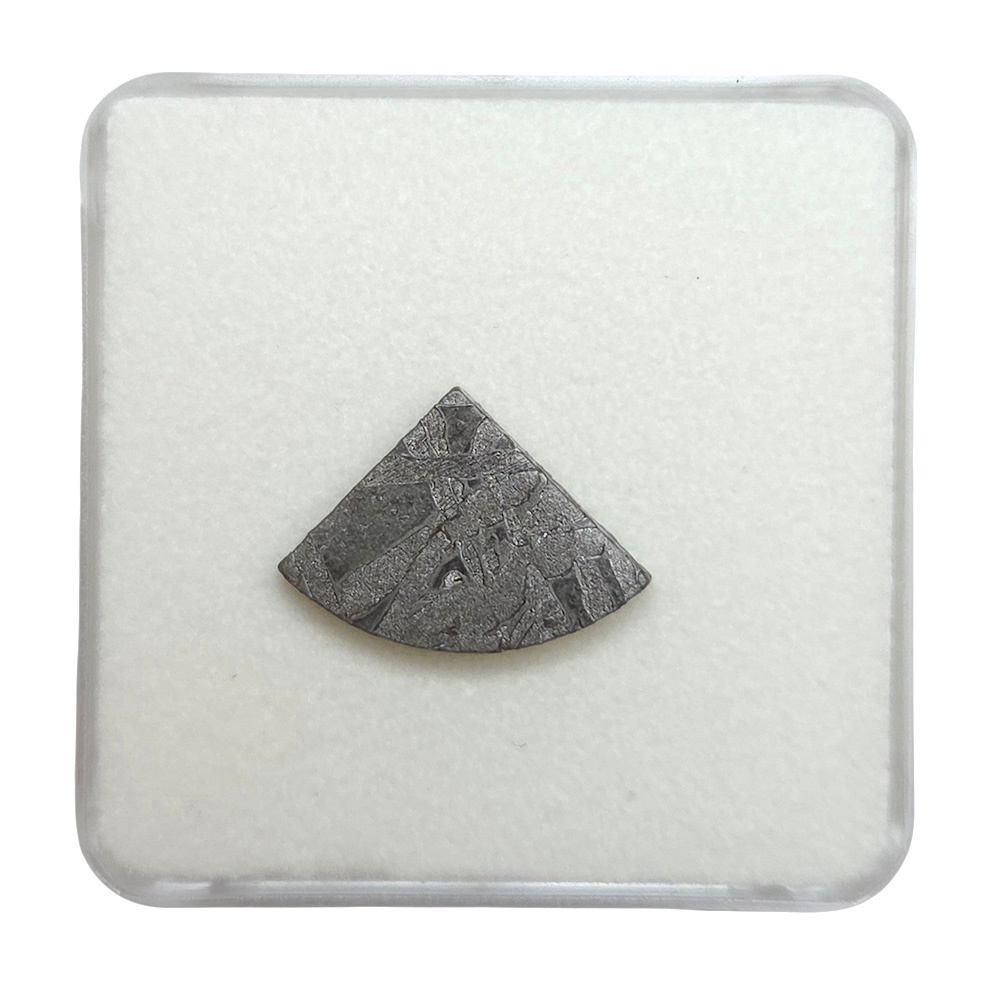
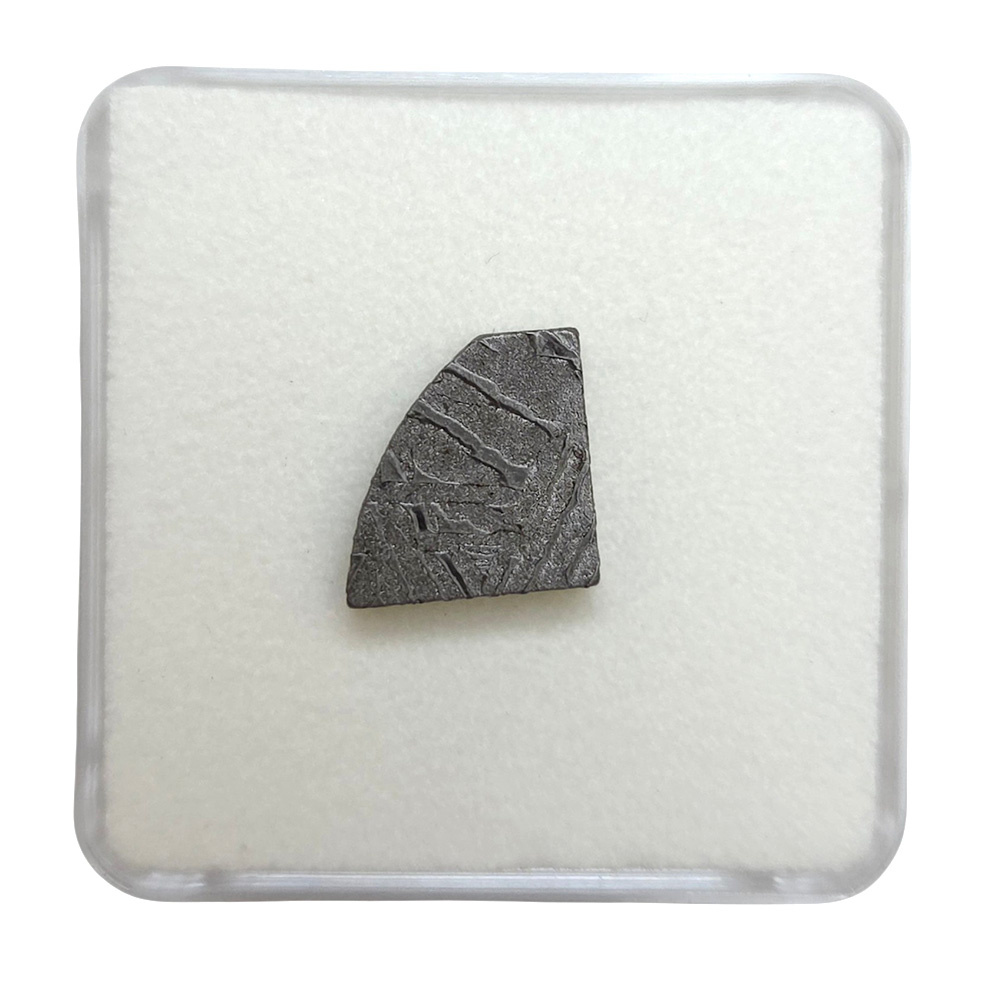
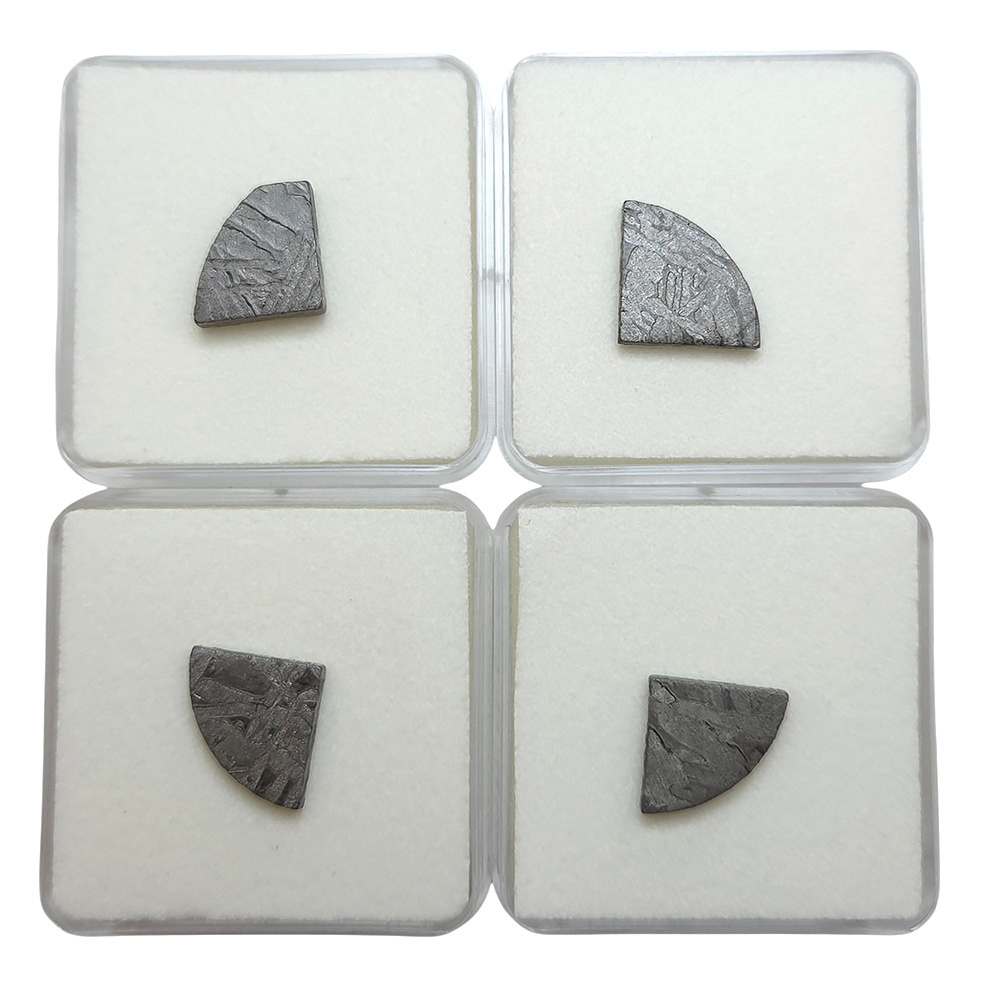
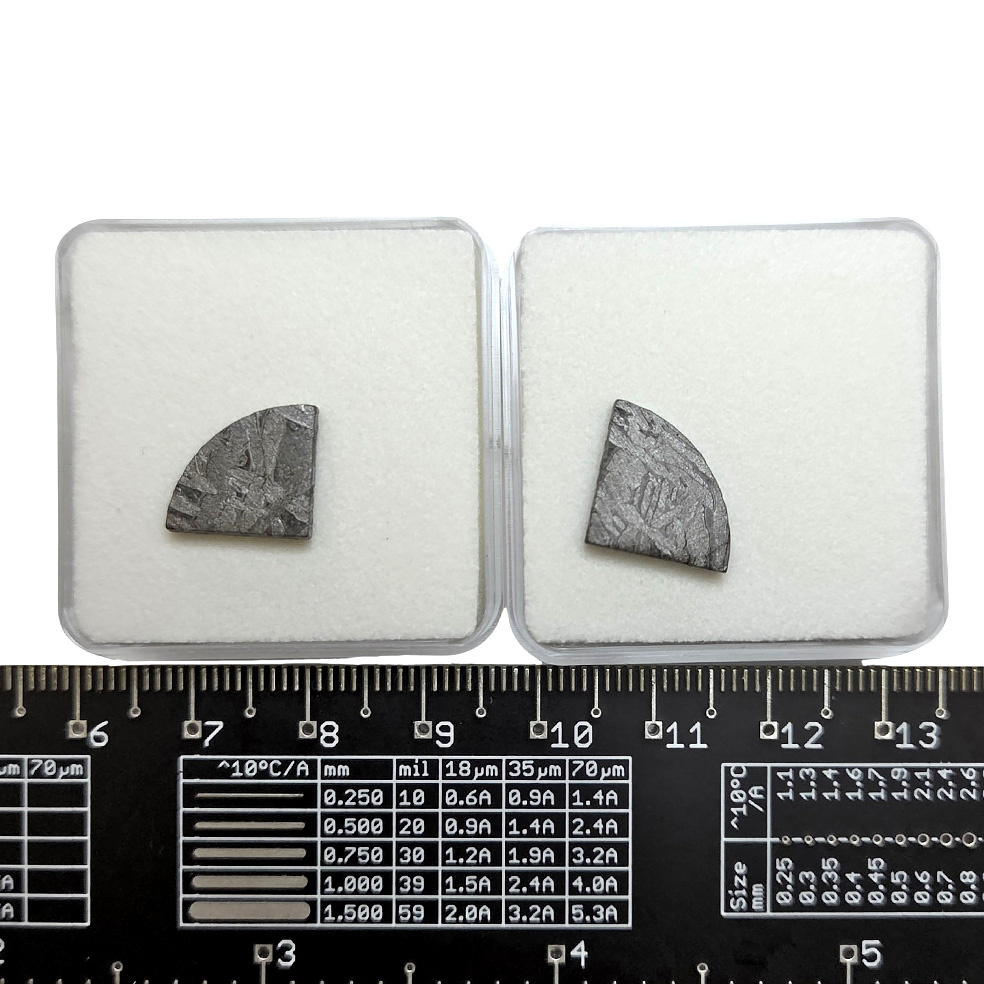
Aletai iron meteorite, etched fragment with Widmanstätten pattern
Etched fragment of the Aletai iron meteorite from Xinjiang with visible Widmanstätten pattern. Photos are for illustrative purposes; you will receive a similar piece in a 3.5 × 3.5 cm box.
- Shipped within 24 hours
- Authenticity guaranteed
- Direct import
- Heeft u nog vragen? See our frequently asked questions
Origin, formation and sites
The Aletai meteorite is an iron meteorite from Xinjiang in northwestern China. It consists primarily of iron and nickel and is classified as a IIIE-an iron meteorite. The metal formed billions of years ago in an early planetary body, during the early period of our solar system. In such an asteroid, heavy metals could sink to the interior and form a metal-rich core or core-like region there.
The iron-nickel material cooled down exceptionally slowly there. During this very slow cooling, various crystalline metal phases formed. When a slice of Aletai is sawn, polished, and then carefully etched with acid, the boundaries between these crystals become visible. This is how the characteristic geometric lines known as Widmanstätten structures appear. The pattern is therefore not an engraving or decoration, but the visible crystal structure of the meteorite iron itself.
The enormous distribution area of Aletai, in particular, makes this meteorite special. Several large iron masses have been found across Xinjiang over a distance of hundreds of kilometers. The known distribution area is approximately 425 kilometers long, making it exceptional for a meteorite.
One explanation for this remarkable dispersal is that the original meteorite entered the atmosphere at a very small, nearly horizontal angle. In such a so-called grazing trajectory, an object does not plunge straight down to the Earth's surface, but travels a great distance through the upper atmosphere.
In this context, there is sometimes talk of the meteorite “bouncing” off the atmosphere. This should not be interpreted as a stone literally colliding with a hard layer. The atmosphere is gradually becoming denser. In the case of a very shallow impact, enormous air resistance, pressure, and changes in trajectory can cause the object to rise again after passing through denser air and continue its flight over a great distance. Meanwhile, parts can break off and fall to the ground at various locations.
For Aletai, such a very flat or possibly partially “skipping” atmospheric orbit is used to explain how fragments of the same meteorite could have traveled such an exceptionally large distance. The most important finds are located in the Aletai region, near the Altai Mountains in Xinjiang, China.
History and naming
The name Aletai refers to the Aletai region, also spelled Altay, in Xinjiang. Over time, several very large iron meteorites have been found in this vast area. A number of these masses were initially described as separate meteorites and were given their own names.
However, research into their chemical composition, structure, and geographical location, among other factors, showed that several of these finds likely belong to the same original meteorite fall. As a result, known masses from this area have been linked together under the umbrella name Aletai.
The combination of enormous iron masses and a distribution area of hundreds of kilometers makes Aletai particularly interesting for meteorite research. In particular, the elongated distribution of the finds provides clues about the very shallow angle at which the original object must have traveled through the Earth's atmosphere.
Interaction, care and safety
This Aletai fragment has been sawn, polished, and etched so that the Widmanstätten structures are clearly visible. Because it consists largely of iron, it is important to store the piece dry. Moisture, skin salts, and high humidity can eventually cause oxidation or rust.
Therefore, preferably avoid touching the etched surface unnecessarily with your fingers and store the fragment dry in the box. Do not use water, cleaning agents, or other chemicals for cleaning. Sanding or repolishing is also not recommended, as this may cause the etched surface, and with it the visible pattern, to disappear.
The fragment is intended as a collector's item. Do not use meteorite material for so-called gemstone waters or other applications where it is placed in water for an extended period. Furthermore, due to its small size, it is not suitable as a toy for young children.
Fun facts
- The known dispersal area of the Aletai meteorite is approximately 425 kilometers long. That is exceptionally large and provides an important indication that the original object flew through the atmosphere at a very shallow angle.
- The frequently used word “ricochet” does not mean that the meteorite collided with a hard boundary of the atmosphere. It refers to a very shallow flight in which the object, after passing through denser air, was able to move back to higher layers and continue its trajectory.
- The Widmanstätten structures on an etched iron meteorite are actual crystal patterns in the metal. They formed through extremely slow cooling in the original celestial body, billions of years before the material reached Earth.
- You will receive an etched Aletai fragment on which the Widmanstätten structures are clearly visible. The photos show examples: each piece is individually cut from meteorite material and therefore has its own shape and pattern. The fragment is supplied in a small box measuring 3.5 by 3.5 cm.
| Article code | ALET |
| EAN | 8784765488380 |

Certificate of Authenticity for meteorite orders. Only choose this certificate if you order a meteorite, moldavite or ot...
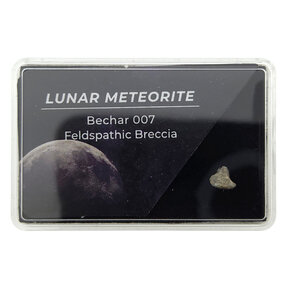
Authentic lunar meteorite Bechar 007 from Algeria. A rare fragment of the lunar surface, safely presented in a transpare...
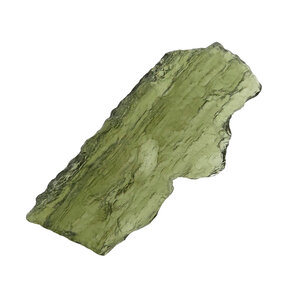

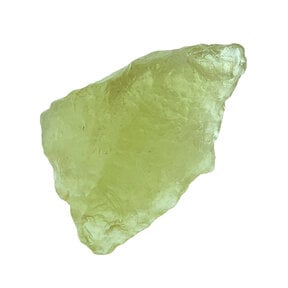
Libyan glass or gold tektite. These beautiful yellow tektites were created by a meteorite impact from 28 million years a...
Fossil Knightia eocaena from the Green River Formation near Kemmerer, Wyoming. A highly recognizable Eocene fish on lime...