
Origin, Formation and Location
The Bechar 006 is a lunar meteorite: a rock fragment that originally formed part of the Moon’s surface. A powerful impact from a large meteorite on the Moon dislodged this material, ejecting it into space at sufficient speed. After a long journey, the fragment eventually landed on Earth.
The rock is classified as a feldspathic lunar breccia. This type of rock is composed of cemented fragments of older lunar material and reflects the early geological history of the Moon, dating back more than 4 billion years. Its composition indicates repeated impacts on the lunar surface, which shattered existing rock and compacted it again.
The Bechar 006 meteorite was found in Algeria, in the Béchar region. This area is known for its dry desert climate, which is favorable for the preservation and recognition of meteorites.
History and Naming
The name Bechar 006 refers to the Béchar region in Algeria where the meteorite was found, followed by a sequence number indicating it is the sixth officially registered meteorite from this area.
After its discovery, the material was analyzed and classified according to international meteorite classification standards. Lunar meteorites are relatively rare and scientifically very valuable, as they provide direct access to Moon material without the need for a space mission.
Handling, Care and Safety
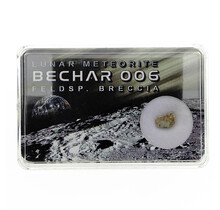
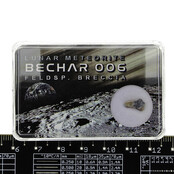
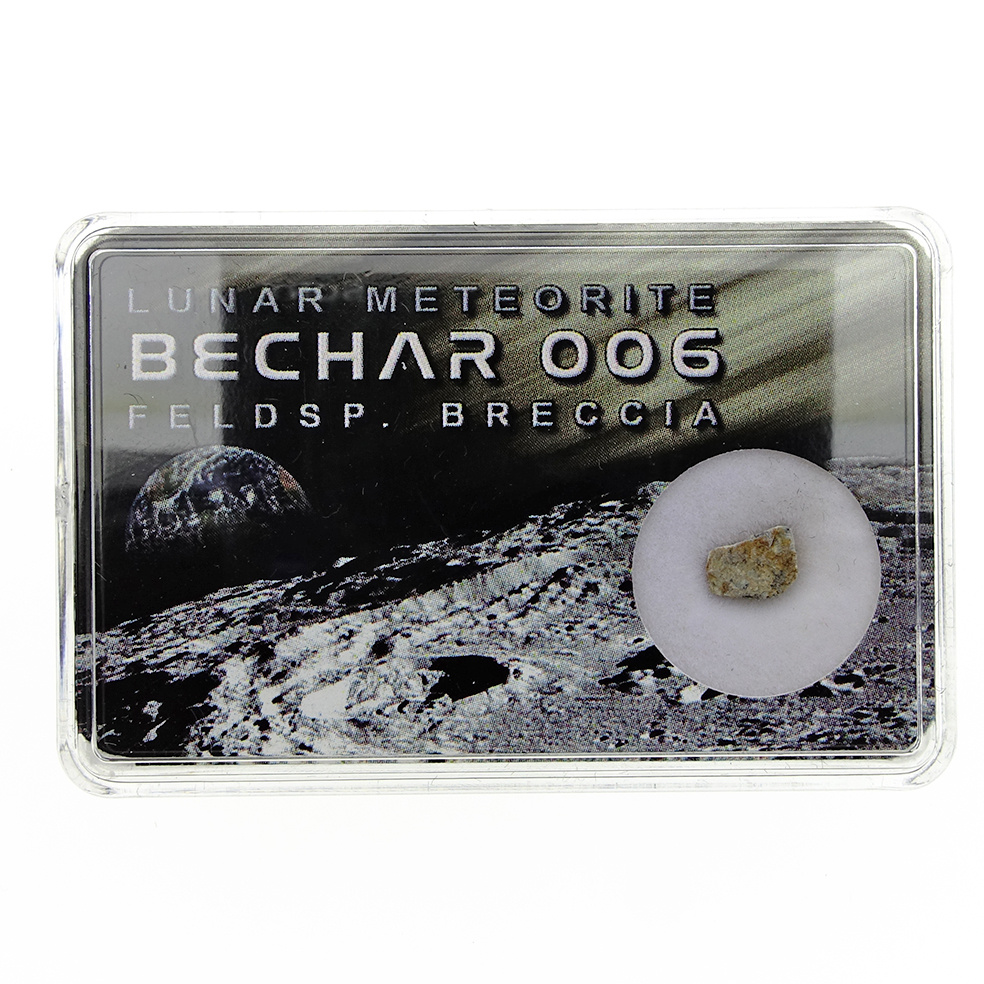
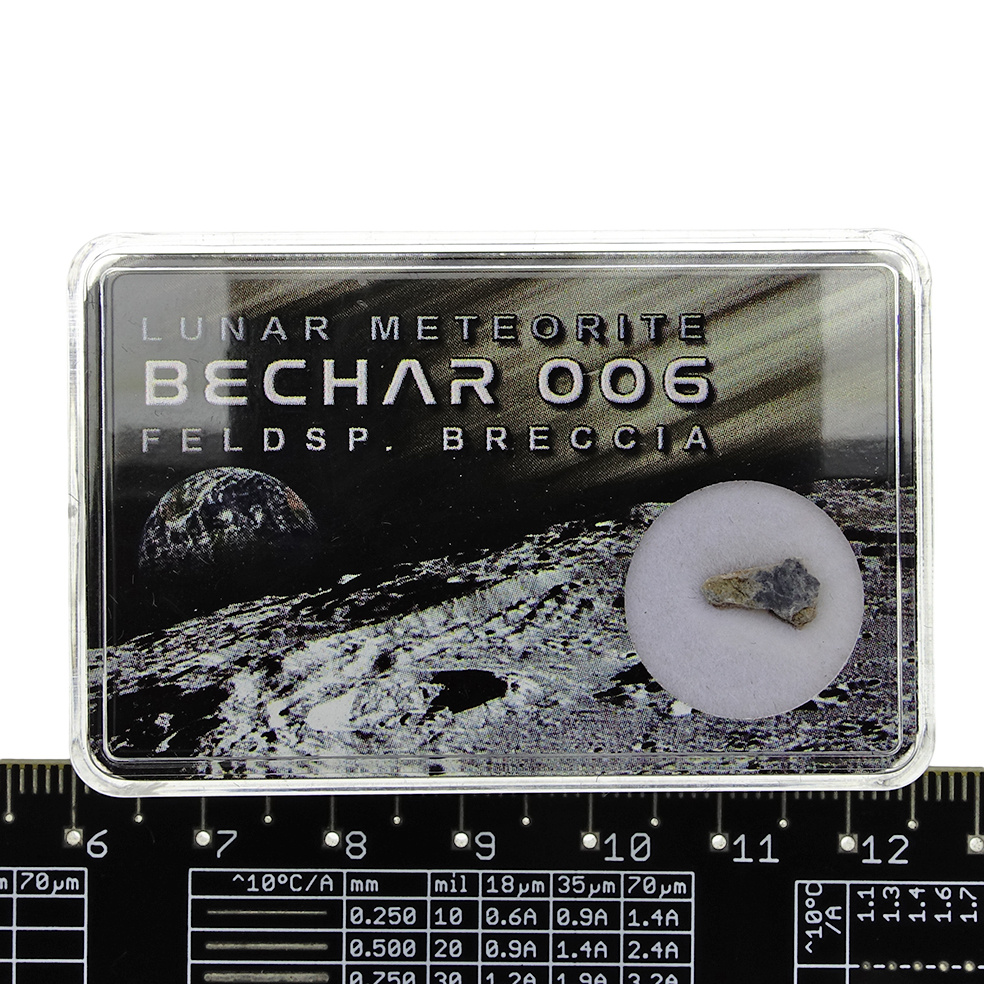
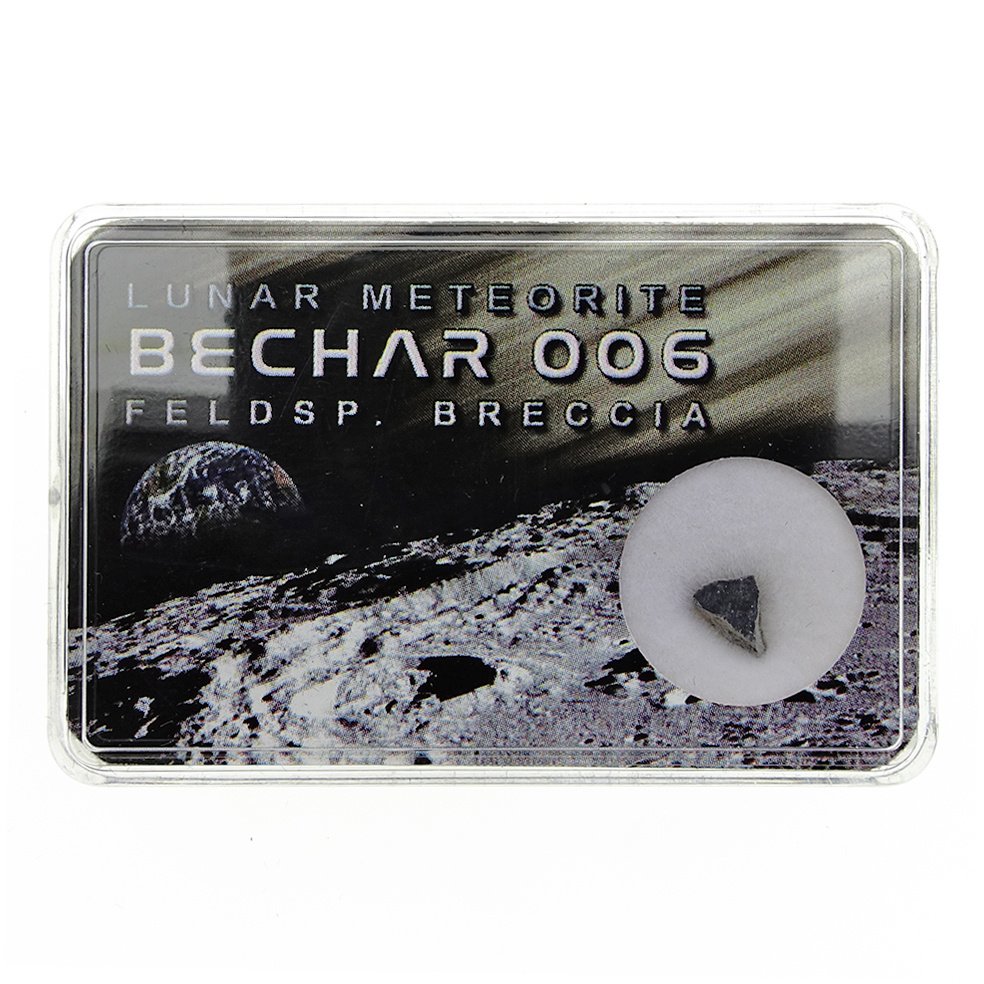
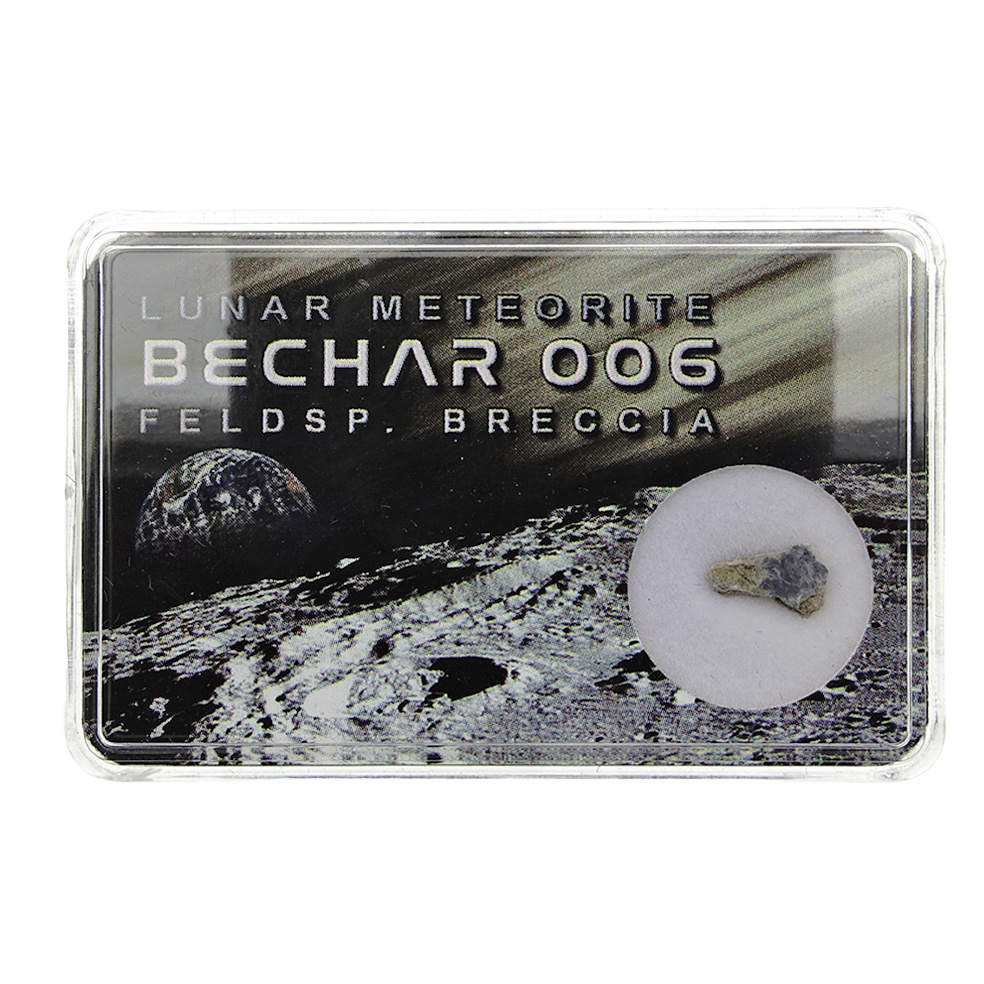
This Bechar 006 fragment is housed in a transparent acrylic box measuring approximately 5.5 cm by 3.5 cm. The box protects the meteorite from touch, dust, and moisture, and is designed to safely store and display the specimen without direct contact.
It is advised not to remove the meteorite from the box. Avoid exposure to humid environments and extreme temperature fluctuations. Meteorites are natural history objects and not intended as toys for children.
The meteorite shown in the photo is for illustration purposes. You will receive a similar acrylic box with an authentic fragment of the Bechar 006 lunar meteorite.
Fun Facts
- Lunar meteorites make up only a tiny percentage of all known meteorites on Earth.
- Thanks to meteorites like this one, scientists can study the Moon without needing space mission samples.