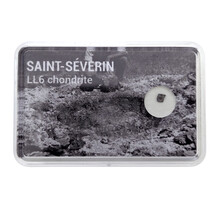

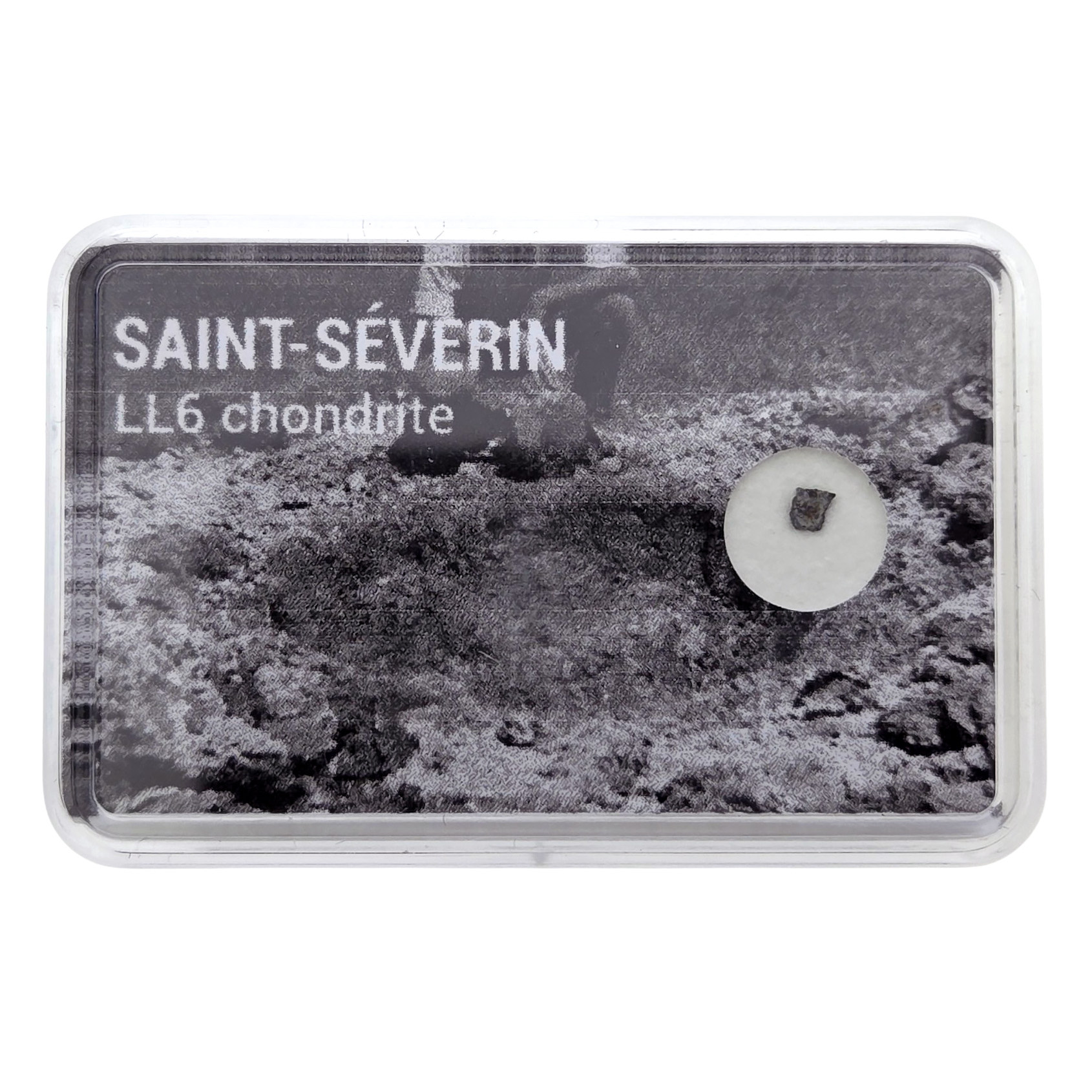
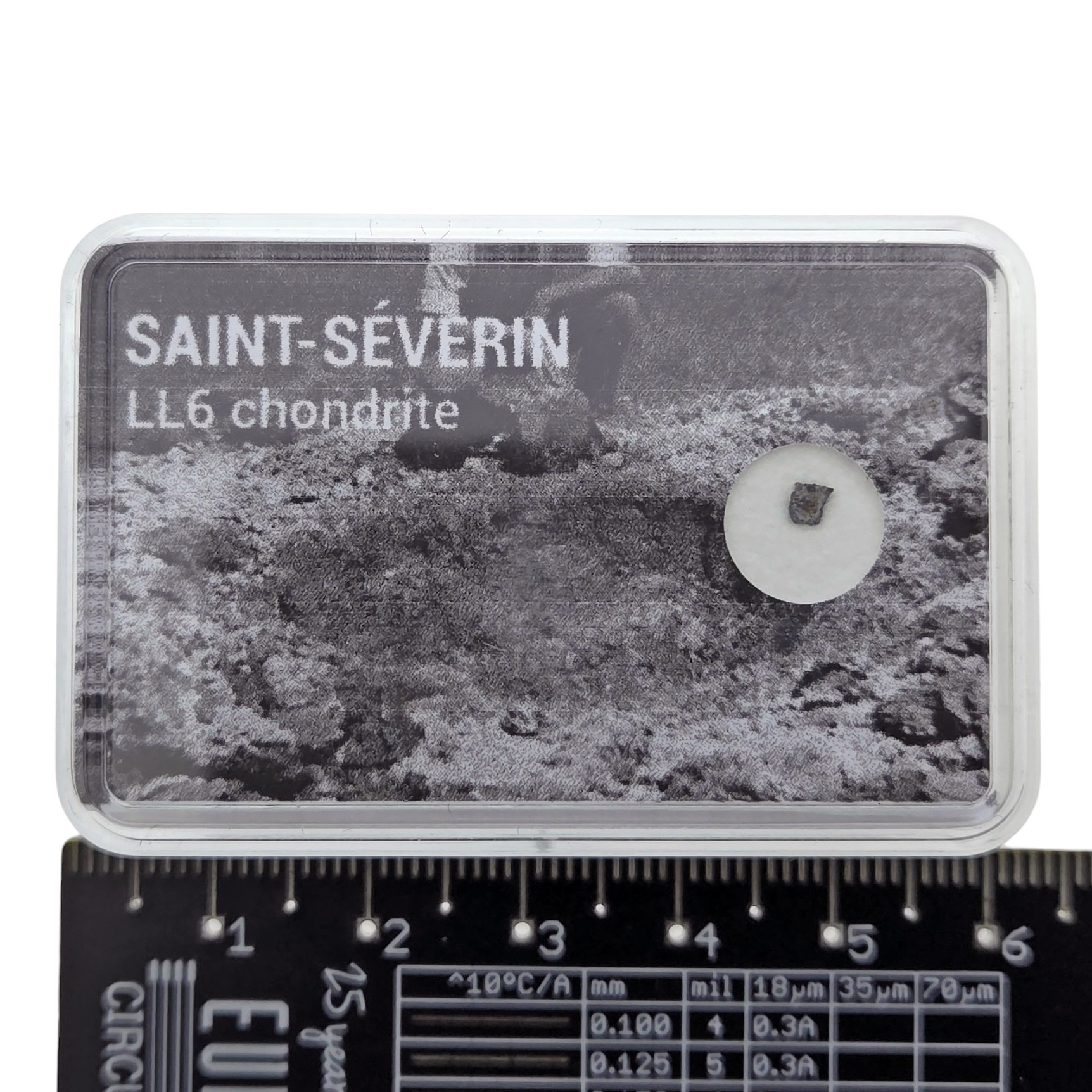
Saint-Séverin meteorite
The Saint-Séverin meteorite is an LL6 chondrite that landed near Saint-Séverin in France in 1966.
- Shipped within 24 hours
- Authenticity guaranteed
- Direct import
- Heeft u nog vragen? See our frequently asked questions
Historical meteorite
The Saint-Séverin meteorite is an LL6 chondrite that landed near Saint-Séverin in France in 1966. It is a classic, historically observed impact known as a fine and well-documented French meteorite. Saint-Séverin is particularly prized because the material was recovered relatively recently and therefore remained scientifically interesting. Moreover, with a total known mass of 271 kilograms, this fall ranks among the larger known French stony meteorites. A nice detail is that Saint-Séverin was later consistently classified as LL6 in the literature, giving the meteorite its definitive place among the ordinary chondrites.
What is a meteorite?
A meteorite begins as a meteoroid: a small piece of rock or metal moving through space. As soon as such an object enters the Earth's atmosphere, compression and heating of the air create a bright light phenomenon that we call a meteor or fireball. Only the part that survives this passage and actually reaches the ground is called a meteorite. During flight, a dark, thin molten crust often forms on the outside. Many meteorites break apart into multiple pieces along the way, creating a so-called strewn field. The speed upon entry is often many kilometers per second higher than the final speed upon impact at the Earth's surface, because the atmosphere strongly slows the object down.
Classification and origin
Meteorites are classified based on their composition and internal structure. Most discovered meteorites are chondrites: stony meteorites with small spherical inclusions, known as chondrules, which belong to the oldest solid material from the early solar system. In addition, there are achondrites, which lack these chondrules and originate from celestial bodies where geological processes such as melting and crystallization have already taken place. Examples of these are eucrites from the HED group, which are associated with the asteroid Vesta. The letters and numbers in classifications such as H6, L5-6, or LL4 provide information about, among other things, the iron content and the degree of thermal change in the parent material. As a result, a classification reveals something not only about the type of meteorite but also about its geological history.
Box dimensions
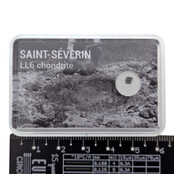
This meteorite comes in a transparent acrylic display box measuring 5.5 x 3.5 cm.
| Article code | MD7 |
| EAN | 8784765485174 |
Certificate of Authenticity for meteorite orders. Only choose this certificate if you order a meteorite, moldavite or ot...
Mini microscope / magnifying glass for sale. Handy magnifying glass to take with you with you 45x magnification and LED ...
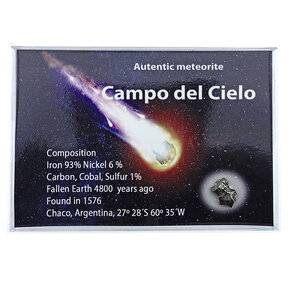
Campo del Cielo meteorite from Argentina in a nice display box. This is an iron meteorite that hit Argentina about 5000 ...
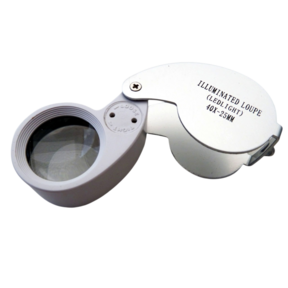
Practical foldable magnifying glass with 40x magnification and LED lighting in a convenient case. Easy to carry and use ...
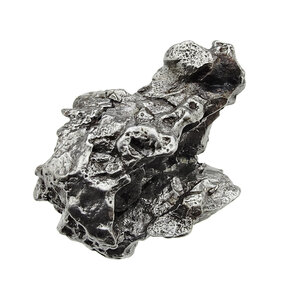
The Campo del Cielo meteorite hit the Earth between 2200 and 2700 BC on the border of the provinces of Chaco and Santiag...
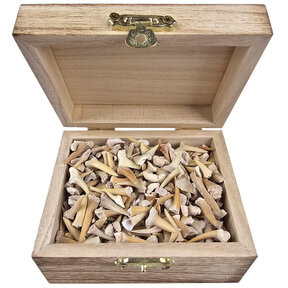
Wooden treasure box with fossil shark teeth and ray teeth that were found in Morocco.
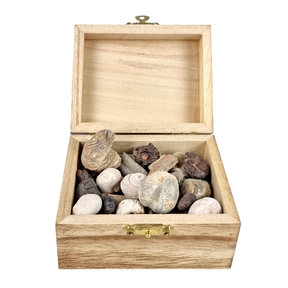
Wooden treasure box with various fossils from Morocco, Brachiopods (shells), Gastropods (snail shells), black ammonite f...