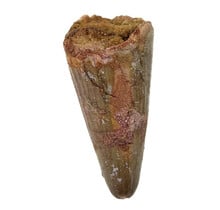

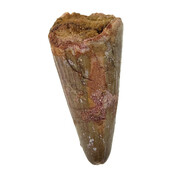
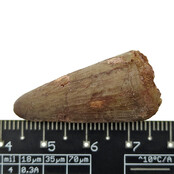
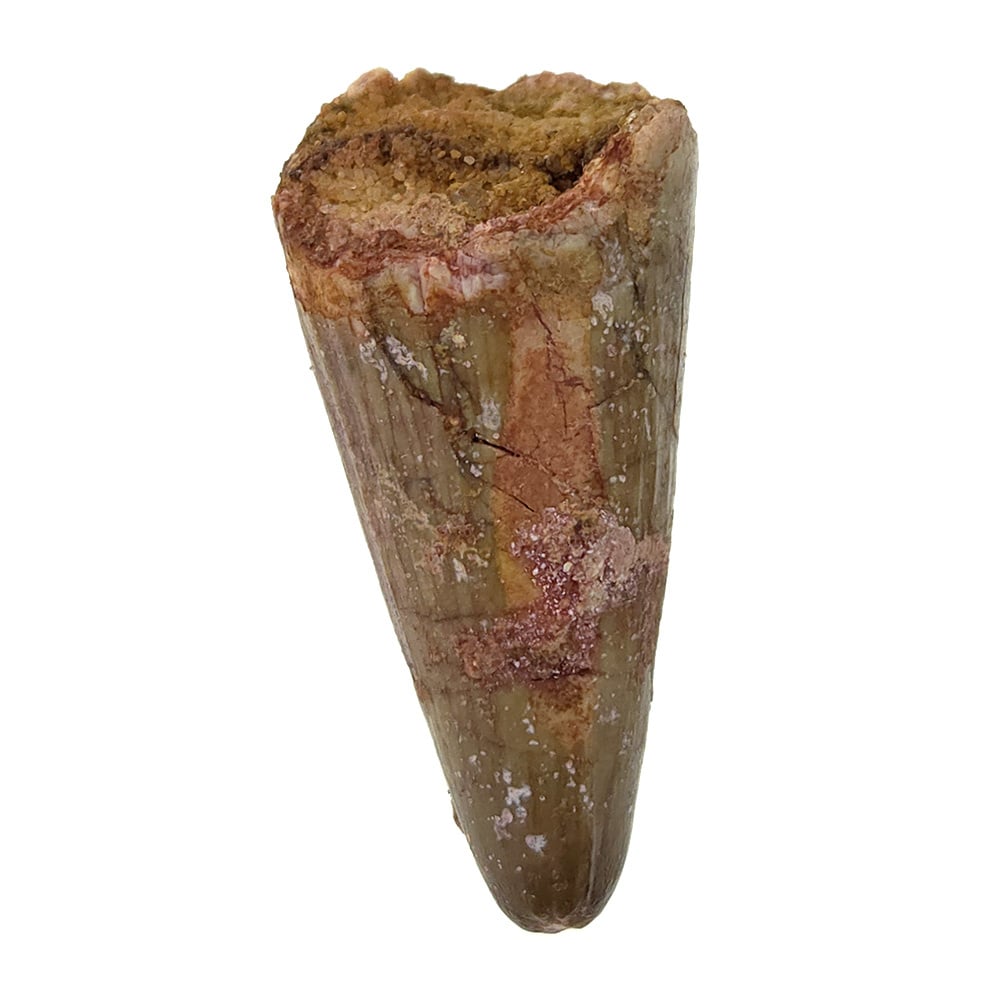
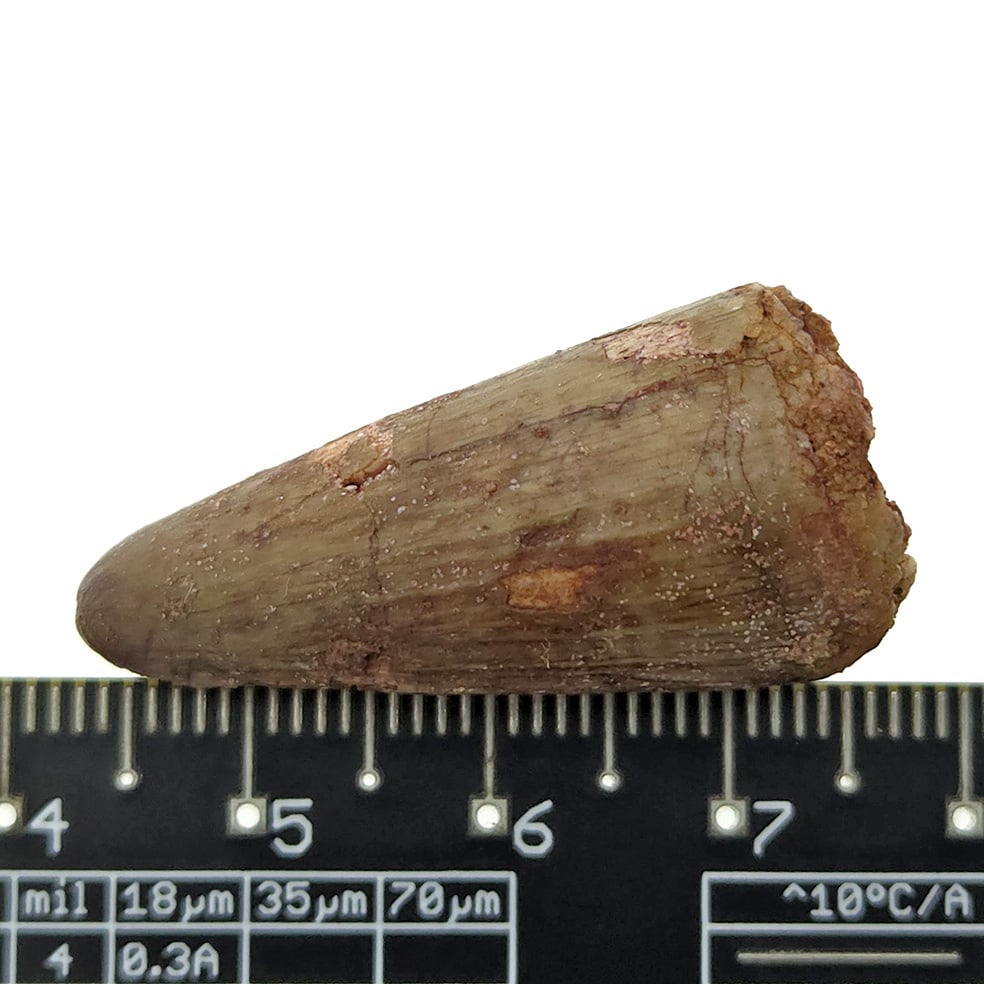
Real dinosaur tooth of the Spinosaurus
Teeth of the largest land predator that ever lived! The Spinosaurus. This dinosaur could grow up to 15 meters long!
- Shipped within 24 hours
- Authenticity guaranteed
- Direct import
- Heeft u nog vragen? See our frequently asked questions
Origin, formation and sites
Beautiful pointed dinosaur tooth from a theropod!
This beautiful Spinosaurus tooth comes from one of the most impressive predators that ever lived on Earth. Spinosaurus aegyptiacus is estimated to have reached a length of up to 15 meters. This made it even larger than the famous Tyrannosaurus rex. A striking feature of this dinosaur was the large dorsal crest, which was likely formed by greatly elongated vertebrae.
Spinosaurus lived during the Late Cretaceous, approximately 95 to 100 million years ago, in a landscape with rivers, swamps, and deltas. Recent research indicates that this animal was not only active on land but was also well adapted to life in and around water. This makes Spinosaurus a remarkable predator, unlike many other large theropods.
These teeth are found in Morocco, in the famous Kem Kem layers on the edge of the Sahara, near the border with Algeria. This area is known worldwide for its rich fossil finds. Teeth, bone fragments, and other remains of prehistoric animals are regularly discovered here.
History and naming
The name Spinosaurus literally means “spiny lizard” and refers to the striking, long spinous processes on the animal’s back. Together, these structures formed the distinctive dorsal crest for which Spinosaurus is so well known today.
Spinosaurus was scientifically described as early as the beginning of the 20th century, but much of the original fossil material was later lost. As a result, this dinosaur had a mysterious reputation for a long time. New discoveries from North Africa, and especially from Morocco, have shed much more light on its anatomy, lifestyle, and hunting behavior over the past few decades.
Spinosaurus teeth are prized fossils because they are instantly recognizable by their elongated, pointed shape. They provide a good picture of the specialized lifestyle of this animal and form a tangible reminder of a vanished world full of large predators.
Interaction, care and safety
The pointed shape of this tooth clearly shows its purpose: grasping and holding prey. The beak of Spinosaurus is often compared to that of modern crocodiles, which fits well with the idea that it hunted extensively in and around water. Teeth like these are sturdy, but they remain fossils and must therefore be handled with care.
Many fossil teeth are not found completely intact. This is quite normal for fossils from old sediment layers. During excavation and preparation, it frequently becomes apparent that a tooth consists of multiple parts. Such specimens are therefore prepared and, where necessary, restored, for example by neatly gluing fracture surfaces back together. This is a common and accepted method of preservation within the fossil world.
It is recommended to store the tooth in a stable place and not to drop it. Cleaning is best done carefully and dry, for example with a soft brush. These fossils are not intended as toys for small children, partly due to the pointed shape and the fragility of the material.
Fun facts
- Spinosaurus is generally regarded as the largest terrestrial predator known to date from the fossil record.
- The long, narrow teeth of Spinosaurus differ clearly from the thicker, serrated teeth of many other carnivorous dinosaurs.
- The Kem Kem region in Morocco is one of the most famous sites in the world for fossils of large predatory dinosaurs from the Late Cretaceous.
| Article code | SP13 |
| EAN | 8784765484559 |

These teeth served as hammers to crack shellfish and even turtle shields. The globidens was a mosasaur with its own eati...
Magnifying glass or loupe with an 18mm lens and 10x magnification. Folds into a handy case.
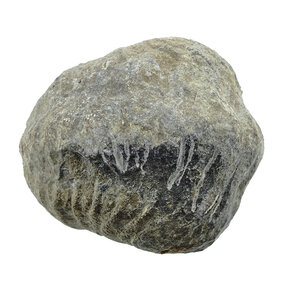
Phacops trilobite from Morocco. Trilobites are very old fossils that lived before the dinosaurs. The last trilobites bec...
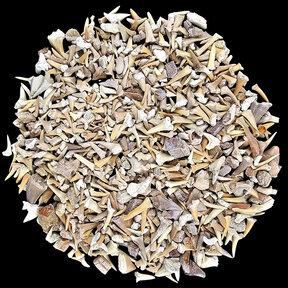
Plastic bag with fossil shark teeth and ray teeth that were found in Morocco.
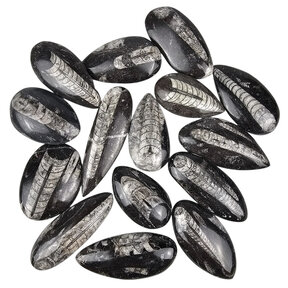
The orthoceras lived about 400 million years ago and is the forerunner of our current squid.